How Much Does a Luxury Liveaboard Dive Trip in Labuan Bajo Cost?
- Mid-Luxe Tier: $5,000 – $8,000 per person for premium cabins and expert-led dives.
- Ultra-Luxe Tier: $10,000+ per person for private charters on phinisi yachts with bespoke itineraries.
- Key Inclusions: All-inclusive gourmet dining, dive equipment, park fees, and private guides.
The sun climbs over the volcanic silhouette of Padar Island, its rays catching the deep blue varnish of the phinisi’s ironwood hull. The teak deck is warm underfoot, and the only sounds are the gentle lapping of the Flores Sea and the distant cry of a white-bellied sea eagle. Below, in the heart of the Coral Triangle, a world of vibrant chaos awaits. This is not merely a vacation; it is a fully-catered expedition into one of the planet’s last marine frontiers. As a senior editor who has spent countless weeks navigating these waters, I am frequently asked not just about the experience, but about the investment required. The question of the “luxury liveaboard Labuan Bajo cost” is complex, a figure woven from threads of craftsmanship, service, and exceptional access. It’s a number that represents far more than a simple transaction; it’s the price of entry to an experience that redefines underwater exploration.
The Spectrum of Luxury: What Defines a High-End Liveaboard?
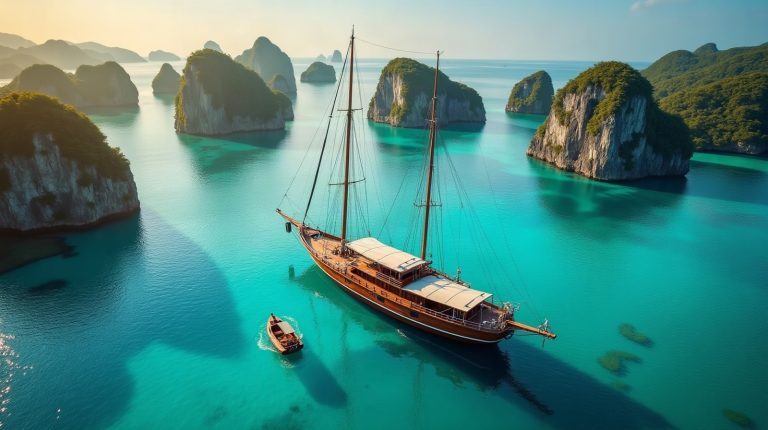
In the world of marine travel, the term “liveaboard” covers a vast spectrum. At one end, you have functional, diver-focused vessels designed for maximum bottom time. At the other, you have floating boutique hotels, where the journey on the surface is as curated as the dives below. The latter is our focus here. The pinnacle of luxury in this region is the modern phinisi, a traditional Indonesian two-masted sailing ship, reimagined. These are not rustic relics; they are multimillion-dollar vessels, often handcrafted by Konjo boat builders in South Sulawesi over several years. A vessel like the 55-meter Prana by Atzaró, for instance, boasts nine suites across 900 square meters of usable space, a crew of 18, and amenities that include a rooftop yoga deck and a wellness spa. This is a world away from cramped bunks and shared facilities.
The defining characteristics of a luxury liveaboard extend far beyond aesthetics. It’s about the crew-to-guest ratio, which on elite charters like Aqua Blu or Dunia Baru often exceeds 1:1. This translates to an anticipatory level of service, where your preferred post-dive drink appears before you ask and your camera is rinsed and ready for the next immersion. Cabin sizes are another metric; expect private suites of over 30 square meters with king-sized beds, en-suite bathrooms featuring rainfall showers, and private balconies. The materials speak of quality—hand-rubbed teak, polished brass, and bespoke furnishings. It’s an environment where every detail, from the thread count of the linens to the weight of the cutlery, has been meticulously considered. This level of craftsmanship and service is the foundational element of the price tag, transforming a dive trip into a true five-star maritime expedition.
Deconstructing the Price Tag: Core Inclusions on a Luxury Charter
When you see a sticker price of, say, $8,000 per person for an 8-day trip, it’s essential to understand the comprehensive nature of that figure. Unlike an a la carte resort stay, a luxury liveaboard is a largely all-inclusive ecosystem. The primary inclusion is, of course, the diving. This means up to four guided dives per day, including tanks, weights, and, crucially, free Nitrox for certified divers—a benefit that can cost upwards of $150 per person on other boats. High-end gear from brands like Scubapro or Mares is often included, eliminating the hassle of traveling with heavy equipment. Most importantly, you are guided by seasoned experts in extremely small groups, often a ratio of just four divers to one divemaster, ensuring a safer and more personal exploration of complex sites like Batu Bolong.
Beyond the water, the price covers your accommodation in a private, air-conditioned suite with daily servicing. All meals are a significant component of the value. We are not talking about buffet-style fare. Expect multi-course gourmet meals prepared by professional chefs, often trained in international fine-dining establishments. Menus blend Western and Asian cuisine, using fresh, locally sourced ingredients. All non-alcoholic beverages, from fresh-pressed juices at sunrise to barista-made coffee, are included. The charter fee also bundles in all planned land excursions. This covers guided treks on Rinca or Komodo Island to see the famous dragons, hikes to the iconic viewpoint on Padar Island, and visits to the unique Pink Beach. Finally, the price typically includes all national park and port fees, which can amount to over $1,000 per person over the course of a week. For a deeper analysis of these costs, our Dive Labuan Bajo Pricing & Cost Guide provides a granular breakdown.
The $10,000+ Per Person Tier: What Does Ultimate Opulence Buy You?
What separates a $7,000 trip from one that costs $12,000 or more? The answer lies in two words: exclusivity and customization. This tier is dominated by private charters, where a group can book an entire vessel, such as the 50-meter Silolona, for a week at a cost that can approach $150,000. On a private charter, the itinerary is not a fixed schedule but a collaborative suggestion. If your group is captivated by the manta ray aggregation at Manta Point, you can choose to spend an entire day there. If you wish to explore a deserted cove for a private beach barbecue, the 20-person crew makes it happen. The vessel and its resources are entirely at your disposal.
This tier also unlocks a new level of onboard amenities and personnel. It’s common for these charters to include a dedicated spa therapist for daily massages, a private yoga instructor for morning sessions on the sundeck, and even a professional videographer to document your journey. The culinary experience becomes completely bespoke, with menus designed around your group’s preferences and dietary needs in consultation with the executive chef weeks before you even step aboard. Vessels like the Aqua Blu, a refurbished British Naval Explorer, offer amenities like an outdoor gym and a sky lounge bar with a dedicated mixologist. You are not just a passenger; you are the director of your own expedition within the UNESCO World Heritage site of Komodo National Park. This is the ultimate expression of freedom and personalized service in one of the world’s most protected marine environments.
The Sweet Spot: Excellent Value in the $5,000 to $8,000 Range
While the allure of a private charter is undeniable, the most popular segment for discerning travelers falls within the $5,000 to $8,000 per person range for a 7 to 9-night trip. This is the sweet spot where exceptional quality, five-star service, and a shared, yet intimate, experience converge. Vessels in this category, such as the Alila Purnama or Amandira, are magnificent phinisis in their own right, typically accommodating 10 to 16 guests. They offer a level of luxury and service that far surpasses nearly any land-based alternative in the region. You still receive the all-inclusive gourmet dining, expert dive guiding, and exquisite accommodation, but on a set itinerary with a small group of like-minded fellow travelers.
The key difference is not a compromise in quality, but in customization. The route is expertly planned to maximize the best of Komodo based on the season and tides. While you can’t decide to linger for an extra day at a specific site, these itineraries are the product of years of experience and are designed to showcase the park’s incredible diversity. You will still dive the legendary sites—Castle Rock, The Cauldron, Crystal Rock—and the marine life is just as spectacular. The crew-to-guest ratio might be closer to 1.5:1 rather than 1:1, but the service remains impeccable and personal. For many, sharing the experience of a stunning sunset over Gili Lawa Darat with a few new acquaintances is a highlight, not a drawback. Exploring the full range of these top-tier locations is detailed in The Definitive Dive Labuan Bajo Guide, which shows that the underwater spectacle is a constant, regardless of your budget.
Additional Costs to Factor In: Beyond the Sticker Price
While a luxury liveaboard is largely inclusive, a savvy traveler must account for several additional expenses to accurately budget for the trip. The most significant is airfare. International flights into major Indonesian hubs like Bali (DPS) or Jakarta (CGK) can range from $1,000 to $2,500 from North America or Europe. From there, you’ll need a domestic flight to Labuan Bajo’s Komodo Airport (LBJ), which typically costs between $150 and $300 round-trip. I always advise clients to arrive in Labuan Bajo at least one day prior to the boat’s departure to mitigate any travel delays. This necessitates pre-trip accommodation, with high-end options like the AYANA Komodo Resort or Plataran Komodo costing between $300 and $700 per night.
Onboard, the most significant extra is the crew gratuity. This is a deeply ingrained and appreciated custom. The industry standard is to tip 10-15% of the charter cost, usually paid in cash (USD or IDR) at the end of the voyage. For a $7,500 trip, this means budgeting an additional $750 to $1,125. While most non-alcoholic drinks are included, premium alcoholic beverages are usually extra. Expect to pay resort-level prices for a curated wine list or top-shelf spirits. Lastly, comprehensive travel and dive insurance are mandatory on virtually every reputable vessel. A policy from an organization like Divers Alert Network (DAN) is highly recommended and will cost around $150 for the duration of the trip. When you are ready to put the pieces together, you can Book Dive Labuan Bajo with a clear understanding of the total investment.
When to Book for Optimal Value and Availability
Timing your booking is almost as important as choosing your vessel, as it directly impacts both price and availability. The main diving season in Komodo National Park runs from April to November, coinciding with the dry season. This period offers the calmest seas and generally the best visibility, often exceeding 30 meters. Consequently, this is also the peak season, with the highest demand and prices. For top-tier vessels, popular dates in July and August can be fully booked 18 to 24 months in advance. If you have specific dates or a particular phinisi in mind, early planning is not just recommended; it is essential.
The shoulder months of April, May, September, and October can represent a strategic choice. The weather is typically excellent, the crowds slightly thinner, and you may find better availability or slightly more flexible pricing. The “rainy season,” from December to March, is considered the low season. While this period sees more surface rain and potentially rougher seas, particularly in the south of the park, the diving can still be extraordinary. In fact, this is often the best time for manta ray encounters at sites in the southern region. Some vessels offer “repositioning” cruises or slight discounts during this time. For more on the regional climate, the official Indonesian tourism board provides reliable overviews. Ultimately, the best time to visit depends on your tolerance for fellow travelers and your specific marine life wish list.
Quick FAQ on Luxury Liveaboard Costs
Is a luxury liveaboard worth the cost in Labuan Bajo?
Absolutely. The cost covers not just diving but exclusive access to remote parts of the 1,733 square kilometer Komodo National Park, five-star service, and an all-inclusive expedition format that is impossible to replicate with day trips from the mainland. The value is in the seamless experience and access.
How much should I tip the crew?
The industry standard is 10-15% of your trip cost, paid in cash at the end. This is typically pooled and distributed among the entire crew, from the captain to the kitchen staff. For an $8,000 trip, a tip of $800-$1,200 is a customary and greatly appreciated gesture for their round-the-clock service.
Do I need to be an advanced diver?
While all certified divers are welcome, Komodo is famous for its strong, nutrient-rich currents. Most luxury operators require an Advanced Open Water certification and a minimum of 50 logged dives to participate in all dives at challenging sites like The Cauldron or Castle Rock. Safety is paramount, and expert guides will always conduct thorough briefings.
Can non-divers enjoy a luxury liveaboard?
Yes, and they often receive a 10-15% discount on the full price. The experience for non-divers is equally rich, with opportunities for snorkeling in pristine coral gardens, kayaking, paddleboarding, enjoying spa treatments, participating in cooking classes, and joining all land-based excursions. It is a holistic luxury expedition, not just a dive trip.
Ultimately, a luxury liveaboard in Komodo is an investment in an experience that transcends a simple holiday. It is the price of admission to a lost world, navigated in consummate comfort and style. It’s about witnessing the raw power of a Komodo dragon on the shores of Rinca, followed by a sommelier-led wine tasting on the deck of a hand-built phinisi. The memories forged in these waters—of schooling sharks in a swirling current or a manta ray gliding silently overhead—are priceless. Ready to explore the ultimate underwater frontier? The team at Dive Labuan Bajo curates the finest fleet of luxury phinisis and expedition vessels in the archipelago. Let us help you craft the voyage of a lifetime.